
Faculty Spotlight: Dr. Kayoko Yokoyama
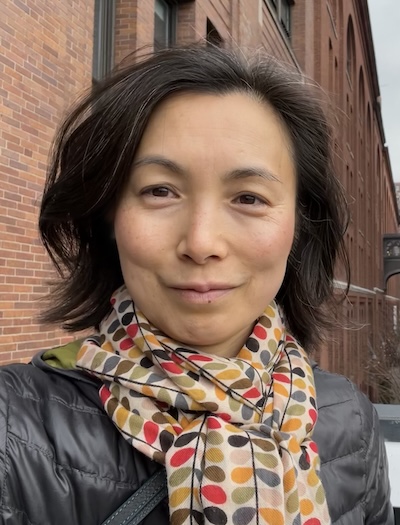 Dr. Kayoko Yokoyama, a core faculty member in the Wright Institute's Counseling Psychology program and adjunct faculty member in the Wright Institute's Clinical Psychology program, was born in Tokyo, Japan. She described her childhood and how, at age five, her father was asked by his company to relocate to the United States. “He went to the U.S. and my mom, younger sister, and I followed a couple of months later,” Dr. Yokoyama recalled. “They thought it would be a two-year assignment, but then two years later they asked him to stay two more years, and well, two decades passed.”
During that time, Dr. Yokoyama and her sister attended the Chicagoland public schools during the week and Japanese school on Saturdays. “I started kindergarten knowing just three words in English - hello, goodbye, and bathroom,” she explained. “I was in ESL classes until third grade but I learned English over time.”
For her undergraduate studies, Dr. Yokoyama attended American University in Washington, D.C., where she earned her BA in international studies. “I started out as a psychology major, but very quickly learned there were classes in other departments that seemed more exciting,” she recalled. She became an international studies major and focused her work on cross-cultural communications. In her senior year, Dr. Yokoyama took a cross-cultural psychology elective in which she had her first Asian-American professor. She loved the course and Dr. Larke Nahme Huang inspired her lifelong interests in the field.
After graduating from American University, Dr. Yokoyama attended Columbia University Teacher’s College, where she earned her MA and EdM in Psychological Counseling. Dr. Yokoyama became very interested in issues surrounding Asian-American psychology. Teacher’s College had a reputation for research on race, racism, and racial identity and Dr. Yokoyama was able to pursue her interests in this area of study.
For her master’s program practicum, Dr. Yokoyama worked at LaGuardia Community College, part of the City University of New York (CUNY) system and there she worked with the first Japanese American psychologist she had ever met, Dr. Kyoko Toyama. After completing her practicum, Dr. Yokoyama continued to work as a counselor at several CUNY locations across four of New York City’s five boroughs for two additional years and loved the experience of working with such diverse student populations. “I got paid very little, but it was really thrilling to be traveling to different boroughs and working with colleagues in different counseling departments,” she recalled. “I just got to meet a lot of interesting people, but also got a real education about the different realities and challenges that students were facing.”
Part of what drew Dr. Yokoyama to her placement at LaGuardia Community College was the opportunity to gain experience teaching. She joked about how her interest in teaching could be traced to her childhood relationship with her sister. “My sister wasn't in school yet, so I would come home and teach her what I learned in school.” As part of her role with CUNY during her practicum and the subsequent years she spent there, Dr. Yokoyama was an adjunct lecturer at several CUNY colleges, teaching courses on career development, new student seminars, and other introductory courses.
In 1998, Dr. Yokoyama moved with her partner to Tempe, Arizona to pursue her Ph.D. in counseling psychology at Arizona State University. Moving to Arizona in the summer was quite a shock to Dr. Yokoyama’s system. “I think it was 112 degrees when we moved in, so it was super hot,” she laughed. Dr. Yokoyama enjoyed her small cohort at ASU and is grateful for the supportive faculty, including Dr. Patricia Arredondo who continues to mentor her today.
Dr. Yokoyama’s doctoral dissertation was about Asian-American women, racial identity, and body image, which was inspired by a trip she took to Japan during her studies. “I was in my advisor’s office after coming back from Japan and I was showing her a fashion magazine that made me so angry because it was all advertisements for cosmetic surgery,” she recalled. “I was outraged and my advisor told me it sounded like I had my dissertation topic.” Dr. Yokoyama had already chosen a different dissertation topic at that point, but followed the advice of her advisor and pivoted to a topic that was much more meaningful to her. When she began her predoctoral internship at the Counseling Center at UC Davis, Dr. Yokoyama chose to specialize in eating disorders and behavioral health as an extension on her dissertation research.
After earning her Ph.D., Dr. Yokoyama completed her postdoctoral fellowship at the Counseling Center at the University of San Francisco. “It was a huge contrast from UC Davis, which had a very large counseling center staff,” she shared. “At USF, we had a more intimate staff and there were more opportunities for outreach work in the community.” Dr. Yokoyama had the opportunity to partner with San Francisco Women Against Rape during her time there. “It was really meaningful to get together with people in the community,” she explained. “We discussed how we were addressing sexual assault in the community and public campaigns that we could work on together.”
From 2004-2020, Dr. Yokoyama was a Professor of Clinical Psychology at John F. Kennedy University in Pleasant Hill, CA, where she taught a variety of courses while also mentoring students, leading the admissions committee, and serving on various other committees. “I really loved admissions because I felt excited about the program I was working in. It felt genuine to talk about the amazing program and I loved the students and people I worked with.” What Dr. Yokoyama loved most about working at JFK was their focus on multicultural education and social justice, as well as working under the guidance of the Chair of the program, Dr. Sukie Magraw.
While at JFK, Dr. Yokoyama served as Director of the Sun-Vision/Sun-Life Japanese Eldercare Workshops from 2015-2019. “It was a program that had been at JFK for twenty-five years and I just happened to be the Director for the last five years,” she shared. “It was an amazing experience and I wish I hadn’t waited so long to get involved.” At first, Dr. Yokoyama was reluctant to get involved because her background was in working with college students and young adults, not with older populations, but eventually her curiosity drew her in. As part of these workshops, JFK partnered with a company called Sun-Vision/Sun-Life who would send a group of elder care professionals for a week each summer to train and learn more about elder care methods in the United States. “It was basically a cultural education and training program with the goal of bringing ideas back to Japan for professionals to implement there,” she explained. “It was really wonderful meeting these elder care professionals and it educated me on older adult care, developmental considerations, and therapy interventions.”
Since 2006, Dr. Yokoyama has had her own private practice where she provides individual therapy to adults with a focus on “serving a diverse range of individuals including women, immigrants, and people of color through a strength and evidence-based approach.” As she prepared to open her practice, Dr. Yokoyama leaned on a community of friends and colleagues who worked together to gather information and prepare for the possibility of a private practice. “It was kind of scary to be on my own because I had always had a supervisor, but it was also really great to be in community with other early career psychologists,” she reflected. “I started off really small because I already had a full-time job and it was a great way to kind of keep my toe in clinical work.” While teaching, Dr. Yokoyama thinks it’s important to continue gaining real world experience as a therapist as well.
Dr. Yokoyama joined the adjunct faculty of the Wright Institute’s Clinical Psychology program in the fall of 2019. “I started by teaching Sociocultural Issues, which is very close to my heart, so that was really easy to dive into,” she shared. In that first year at the Wright, Dr. Yokoyama also taught Multicultural Awareness and Intervention: Group Therapy, but in recent years she has loved teaching Case Conference and supporting students in a seminar setting.
From 2021-2023, Dr. Yokoyama worked with Team Level Partners as a Diversity Consultant, producing workshops on topics including Asian American identity and mental health, implicit bias, and inclusive practices. “I never thought I’d be doing consulting work, but it was such a natural fit,” she explained. “To me, it's always a new challenge when you get the opportunity to translate your psychological knowledge to a new community.” As part of her work with Team Level Partners, Dr. Yokoyama had the opportunity to participate in the White House Initiative on Asian Americans, Native Hawaiians, and Pacific Islanders (WHIAANHPI). “We were invited to present at the Department of Treasury and it was the first time in ten years that all these Asian-Americans throughout the federal government got together to have a conference,” she shared. “I presented on topics like implicit bias, mental health, and Asian-American identity.” Dr. Yokoyama described the experience as exhilarating and she was honored to have played a part at this conference.
In 2026, Dr. Yokoyama joined the part-time core faculty of the Wright Institute’s Counseling Psychology program. “My master’s degree and PhD are both in counseling, so I’m from the counseling world,” she explained. “I feel like it’s coming full circle for me to be teaching in the Counseling program.” So far, Dr. Yokoyama has taught Multicultural Awareness and Sensitivity and Research Based Practice. While the multicultural course was right in her wheelhouse, she enjoyed digging back into her own graduate studies in preparation for teaching research methods. “It reminded me of an amazing professor back at Columbia, Dr. R. Gary Bridge, who taught my research methods class in graduate school,” she reflected. “It was such a remarkable class and he was such a captivating instructor, so I tried to bring just a little bit of his spirit into my teaching.”
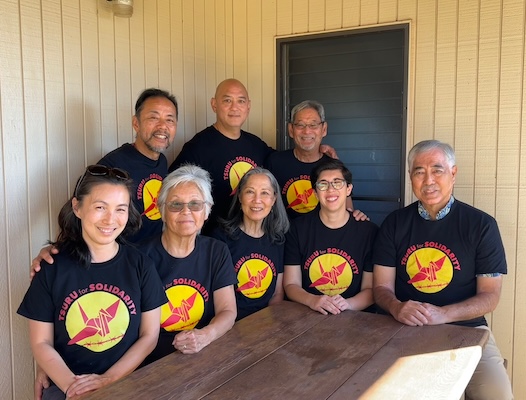 Since 2020, Dr. Yokoyama has been a volunteer facilitator and trainer for Tsuru for Solidarity, “a nonviolent, direct action Japanese American social justice advocacy organization that works to build solidarity with other communities of color who have experienced racial and state violence.” Dr. Yokoyama was introduced to Tsuru by one of her mentors, Dr. Satsuki Ina, who is a co-founder of the organization. Dr. Yokoyama describes volunteering with Tsuru as “one of the most beloved” elements of her work. Tsuru began as older Japanese Americans began to protest immigration policies and family separation at the border. Dr. Ina created the Healing Circles as a space for Japanese American community activists to process their feelings after protests and these Healing Circles have expanded into various other spaces and communities. “Every two years, the Japanese American community organizes a pilgrimage to Tule Lake, one of the sites where Japanese Americans were imprisoned, to really honor and learn more about that history. My sister and I just got back from a pilgrimage last month,” she explained. “We led Healing Circles so people could talk intergenerationally because many families have never been able to talk about this history of incarceration and it was very powerful.”
Outside of her busy schedule, Dr. Yokoyama prioritizes making time for her own self-care just as she advises her students to do. “I’ve been a dedicated practitioner of yoga for about thirty years,” she shared. “It’s something I love and a really important practice in my life.” Dr. Yokoyama considers her yoga practice essential to preparing herself for work with clients. In her spare time, she also enjoys trying out new recipes. “Growing up, I never wanted to be in the kitchen with my mom because the traditional expectation for Japanese women was to do all of the cooking,” she recalled. “I’m very much a feminist, so I didn’t want that to be my life and I didn’t want to learn how to cook…but I love food and cooking!”
Looking ahead, Dr. Yokoyama is excited to see how her new role in the Wright Institute’s Counseling Psychology program develops in the coming years. She just began teaching Professional Development Seminar for the first time and is excited for the opportunity to work with and guide students during their practicum. “There’s something wonderfully warm about the Counseling program - it’s pretty amazing,” she reflected. “It’s fun to have fun at work, so I really appreciate that warmth and Dr. Richardson’s leadership.” We’re excited to see what the future holds for Dr. Yokoyama in both the Counseling and Clinical Psychology programs at the Wright Institute.