
Faculty Spotlight: Dr. Adrienne Rosenberg
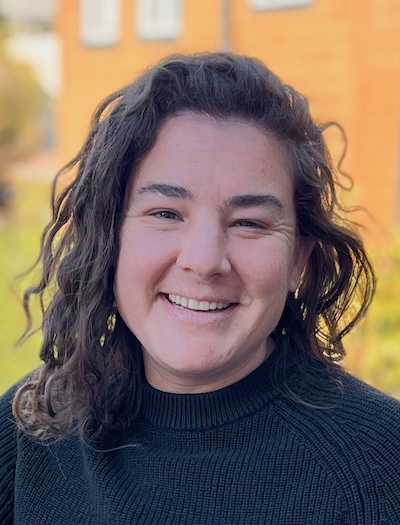 “A combination of my temperament and my Jewish and Queer identities has made me generally skeptical of authority and interested in people that redefine the good life outside of dominant social norms,” shared Dr. Adrienne Rosenberg, a 2020 graduate and current faculty member in the Wright Institute’s Clinical Psychology Program. “You can draw a direct line between that, my dissertation on clinical failure, and my love of working with the neurodivergent, queer, immigrant, and disabled communities.”
Dr. Rosenberg grew up in Berkeley, California with her parents and older brother. Her mother is a therapist and her father is a psychiatrist, but Dr. Rosenberg initially resisted the idea of following in her parents’ footsteps. “Gymnastics was sort of my first love,” she explained. “I was a serious gymnast throughout my childhood.” Dr. Rosenberg attended Prospect Sierra School in El Cerrito, California from kindergarten through eighth grade, then went to Berkeley High School, which she found to be an exciting and creative community, but which was also very socially segregated, especially as compared to the diversity of her gymnastics team. Dr. Rosenberg spent one summer during high school in Nicaragua and it completely changed her perspective on certain values or ways of living that she had thought were universal. “I lived with a family in a rural town of 1,500 without any contact with anyone I knew,” she recalled. “As a 17 year old, I was blown away by the way in which my frame for understanding the world fell apart in that context.”
For her undergraduate studies, Dr. Rosenberg attended Harvard University in Cambridge, MA and earned her BA in social anthropology with a minor in studies of women, gender and sexuality in 2011. Looking back, she remembers feeling alienated by the culture of the institution and by the seriousness of her peers. Fortunately for Dr. Rosenberg, she was able to find her people nonetheless. “I lived in an amazing co-op full of the sort of alternative, lefty people on campus. We ate fresh baked bread and delicious meals together every day,” she reflected. “Some of my housemates went on to become professional chefs and bakers and a few of them are pretty much family to this day.” Her life experiences, along with the fact that many of her family members were killed in Auschwitz, instilled a deep curiosity in Dr. Rosenberg about cultural and social differences. She has always been interested in how we can work to understand one another across those divides to create flourishing, diverse communities, which led her to study anthropology and gender studies. While studying at Harvard, Dr. Rosenberg was a Peer Counselor and also a counselor for the Fenway Community Health Center LGBT Helpline.
From 2013-2015, Dr. Rosenberg was a counselor at Berkeley Free Clinic’s Peer Counseling Collective (PCC), providing counseling to drop-in clients and facilitating training for incoming counselors. Looking back, she believes that her work at PCC helped to form her into the clinician she is today. “We were trained in non-directive counseling, which meant the only tools available to us were listening, reflecting, and naming feelings,” she recalled. “We put our faith in the idea that people already have everything they need inside them for their own healing, and took seriously the concept of unconditional positive regard.” At PCC, Dr. Rosenberg and her fellow counselors practiced remaining calm and quiet and just listening to their clients without actively trying to help. “In some ways, I think this is one of the hardest clinical skills to learn,” she shared. “If a client doesn’t feel heard, all the theoretical knowledge and clinical tools in the world won’t make you an effective therapist.”
In the fall of 2014, Dr. Rosenberg enrolled in the Clinical Psychology program at the Wright Institute. While she considered several schools in the Bay Area, she chose the Wright Institute because it felt “cozy, homey, and human.” As a student, she really enjoyed the seminar classes, but found most of her studies exciting and engaging. “I loved getting to think and talk about clients in supervision and classes,” she reflected. “I felt that I was right where I should be.” Dr. Rosenberg particularly enjoyed trying out a variety of clinical settings through her practicum training each year in the program. “The toughest challenge was navigating two major surgeries” she shared. While studying at the Wright Institute, Dr. Rosenberg discovered that she had a congenital hip condition and underwent two pelvic reconstruction surgeries, which caused her a lot of pain and required her to re-learn how to walk. “I had to start to work out what it could look like to take care of others professionally while also attending adequately to myself,” she shared.
The title of Dr. Rosenberg’s doctoral dissertation was “When Our Best Efforts are for Nought: clinicians’ experiences of treatment failure.” “I was so sick of reading articles about the perfect case examples that exactly paralleled and confirmed some clinical theory or another,” she explained. “People are so much messier and more interesting than that.” She was curious about the cases where things went wrong, so she set out in search of them. “Of all the fields, we should have intimate knowledge of and comfort with our own shortcomings,” she reflected. “This field is about the experience of being human, and being human is definitely not about constant success.” Dr. Rosenberg was not surprised to find that there was minimal research into clinical failure, but discovered that clinicians’ attachment to success and to the concept of themselves as invariably good and helpful often gets in the way of effective treatment for their clients.
From 2019-2020, Dr. Rosenberg completed her internship at Westcoast Children’s Clinic. After her internship was complete, she decided to stay on for an additional year, working as a Bilingual Staff Clinician and Assessor. “I didn’t want to say goodbye to my clients yet, I didn’t want them to have to say goodbye to me, and a number of my peers from internship, who I loved, were also staying on,” she shared. “I was also getting great training and great experience.” In the second year, her role remained mostly the same, but her relationships with clients deepened significantly.
From 2021-2025, Dr. Rosenberg worked as a Bilingual Staff Clinician and Supervisor at the Native American Health Center (NAHC) in Oakland, which she described as a staple of the Oakland Native community and the Fruitvale neighborhood. Dr. Rosenberg loved working for an organization with such close ties to the community and developed strong bonds with her colleagues and clients there. “I got to see clients of every age from a full cross section of Oakland, with such an array of life experiences, and to hear about how they’ve made meaning and found joy, sometimes in very challenging circumstances,” she reflected. “As always, I felt lucky to be in relationship with my clients, to be allowed such an intimate understanding of them and their lives.” Dr. Rosenberg found that the most difficult aspect of working in community mental health was burnout. “You are up against the seemingly insurmountable injustices of our various systems, and sitting with the ways they have played out in individual lives,” she explained. “The meaningfulness of the relationships can sometimes feel lost in the sense of powerlessness.” Although she left NAHC in 2025, Dr. Rosenberg still provides periodic consultation there on child and youth cases.
Dr. Rosenberg opened her own private practice in Oakland, California in 2022. In her practice, she provides individual therapy and administers assessments with a focus on gender expansive, transgender, and nonbinary youth and adults. “I love queer people and the queer community, so I will always want to offer my skills and expertise to the community,” Dr. Rosenberg shared, “but in actuality I work with clients with a pretty broad spread of identities and presentations.” She loves being her own boss and enjoys the freedom that working in private practice affords her.
In January of 2023, Dr. Rosenberg became an adjunct professor at the Wright Institute. “I was feeling burnt out and needed something different to balance out the direct clinical work,” she explained. “In fact, teaching has not only balanced it out, but really enlivened my own work.” The first course she taught was Intervention: Brief Therapy, then she began teaching Case Conference and Advanced Clinical Seminar as well. Dr. Rosenberg loves teaching the clinical seminar courses and hopes to perhaps teach Advanced Ethics in the future as well. “Being able to talk with students about their cases, share examples from my work, and talk about clinical theory together keeps me excited about clinical work,” she reflected. “It also keeps me on my toes; our students are doing really interesting work in so many different settings, and often have very challenging and nuanced cases.”
Dr. Rosenberg loves connecting with students and helping them to grow as clinicians. One key piece of advice that she shares with students is that this work is all about relationships, both with clients as well as with colleagues and supervisors. “If we can extend empathy, understanding, and the opportunity to be imperfect to our clients, we can do it with each other too,” she advised. Dr. Rosenberg also reminds them that there will be many hoops to jump through on the way to licensure and after licensure and you have to accept that as part of the career. She encourages students to “find joy in your work, maintain a life and an identity outside of work, and stay connected to why you are here.”
Over the past few years, Dr. Rosenberg has become very interested in ecotherapy. Inspired by her love of the outdoors and summers spent in the Sierras growing up, she started and ran an ecotherapy group at the Native American Health Center with Spanish-speaking women. “It is now in its fourth year and being run by a postdoc, with a few members who have been attending the whole time,” she shared. “It mostly grew out of my individual work with a lot of people who had immigrated from Spanish-speaking countries, many of them from rural areas, who talked about missing their native landscapes. I wondered if it might help address a sense of alienation from living somewhere that on a sensory and bodily level may not feel like home.” This group served many purposes as it helped these women heal their trauma, increase their physical activity, and connect with each other as well as with the local natural world. In 2024, Dr. Rosenberg gave two conference presentations on utilizing ecotherapy in community mental health settings and was excited to share its benefits with other clinicians.
While she has always been confident as a therapist, Dr. Rosenberg admitted that she was anxious about opening her practice to assessment and beginning to teach, but she’s very proud that she pushed herself and is so happy that she is now doing both. Dr. Rosenberg also considers establishing the ecotherapy group at NAHC to be one of her greatest accomplishments in her career thus far. “It took a lot of perseverance to really get it up and running with a critical mass of clients attending,” she reflected. “It’s now a really beloved community resource with a big impact on its members. I’m proud of having continued to push myself.”
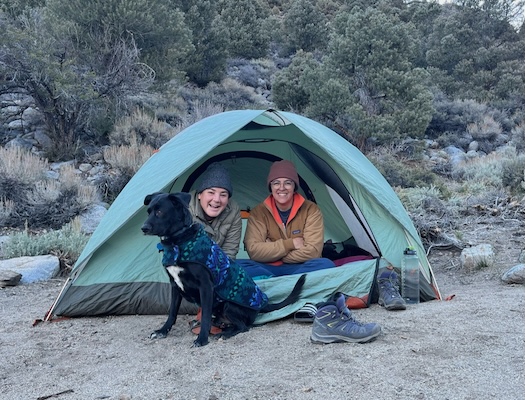 Outside of her busy work schedule, Dr. Rosenberg loves spending time hiking new trails in the East Bay Regional Park District with her wife, dog, and her new baby who was born last May. She considers herself a “lapsed martial artist” and loves reading fiction and swimming. “My wife and I dabble in outrigger canoeing,” she shared. “In the summer, we spend as much time in the mountains as we are able and in the winter, we craft and hike in the mud.” Dr. Rosenberg is also close to her parents. “Despite what my 19 year old self would have predicted, it turns out that it’s really fun to share a field with my parents, and I consult frequently with them about my work,” she laughed.
Looking ahead, Dr. Rosenberg shared that the future is hard to predict with a new baby in her life. She’s happy with her current situation and plans to continue doing some combination of working in private practice and teaching for the foreseeable future. This year, she became a half-time institute faculty member at the Wright Institute and looks forward to the new opportunities this role will bring. Above all else, Dr. Rosenberg shared that she is grateful to be in a profession that always feels challenging and meaningful.