
Alumni Spotlight: Dr. Susan Ryan
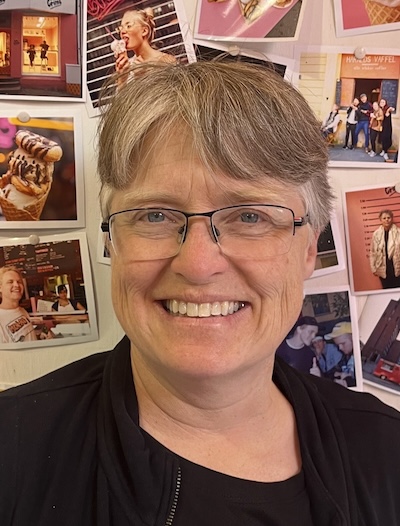 “I want to be able to provide to the next generation of clinicians the kind of caring, supportive, thought-provoking, life-changing support I received,” explained Dr. Susan Ryan, a 2022 graduate of the Wright Institute’s Clinical Psychology program and the current director of Wright Institute Older Adults Counseling and Psychological Services. “That's pretty ambitious, but my experience was life-changing and I try to provide the kinds of opportunities and support that I felt were so helpful for me as a student.”
Dr. Ryan was born and raised on the east coast of the United States. When she was sixteen, her family moved to Palo Alto, California. For her undergraduate studies, she attended the University of California at Berkeley, where she earned her BA in Slavic languages and literatures. “My motivation was cultural understanding,” she reflected. “It was the middle of the Cold War and we were facing threats, as we are again now, of nuclear annihilation and I knew that we needed to be able to understand other cultures in order to have peace.” Dr. Ryan loved her time at UC Berkeley, studying Russian and political science and living in student co-op housing. She also had the amazing opportunity to study abroad for a year in Russia, which she described as an extraordinary experience.
Before becoming a psychologist, Dr. Ryan provided educational therapy for students with learning and developmental differences. She founded her own company, Susan Ryan Consulting, but also worked as a learning specialist and educational therapist at Bay Hill, a school for children with developmental differences. “Over time, I discovered that, for a lot of the kids, socio-emotional wellbeing needed addressing more than the academic side,” she explained. Dr. Ryan realized that she wanted a career that was focused more on supporting people’s emotional needs.
In early 2017, Dr. Ryan was in the process of applying for the educational psychology program at UC Berkeley when a friend told her about the Wright Institute. “The next day, I met with a consultant who talked me through all the different kinds of counselors and the paths to get there,” she recalled. “Forty-eight hours later, I had submitted my application to the Wright Institute.” Dr. Ryan was drawn to the Wright Institute’s focus on educating clinicians to society and chose to pursue her PsyD instead of her MA because of her interest in assessment. “It was such a quick decision, but it was the best thing I ever did,” Dr. Ryan reflected.
Dr. Ryan began her studies in the Wright Institute’s Clinical Psychology program in August of 2017. “My first year was such an enormous adjustment,” she admitted. “I think as an older career-changing student, people might think I came in with more life experience to draw on, but it really felt like I had no idea what I was doing.” Dr. Ryan’s first and second year practicum placements were at an elementary school and at the Wright Institute’s Psychodynamic Clinic. In her third year, Dr. Ryan’s main practicum placement was at the Summit Center and she took on a supplemental practicum at UCSF BrainLENS. “I knew they would be training me to meet research standards for administration at UCSF BrainLENS,” she explained. “The added bonus was that I got access to the data set and was able to use that for my dissertation, which really expedited my dissertation.”
Dr. Ryan completed her pre-doctoral internship at Kaiser Santa Rosa from 2021-22, with rotations in child & family psychiatry, adult psychiatry, and addiction medicine. “Part of my role there was conducting ADHD assessments across the lifespan, which I was really interested in from my background working with ADHD,” she shared. “Even though I had loved my work with older adults so much, I was still drawn to child assessment.” After completing her first rotation, Dr. Ryan finally decided that working with children wasn’t the path for her and she thoroughly enjoyed her two subsequent rotations working with adults. She appreciated the immersive nature of the addiction medicine rotation and learned about outpatient and residential treatment options, which has been very useful in her work in subsequent years.
Looking back on her time as a student at the Wright Institute, Dr. Ryan has many positive memories. “I felt so extraordinarily privileged the entire time to have such amazing teachers and to have so many wonderful people around me,” she explained. “People who were interested in caring for others and really engaged in understanding themselves and trying to change things for the better.” Dr. Ryan’s biggest challenge was overbooking herself and taking on too much, but she also regrets not switching her focus from working with children to working with older adults sooner.
Two faculty who had a huge impact on Dr. Ryan were her Case Conference leader, Dr. Beate Lohser and Wright Institute Director of Clinical Services, Dr. Deanna Van Ligten. “They opened my eyes to a whole new way of thinking about people,” she explained, “It was a compassionate, generous, curious perspective.“ Dr. Ryan also learned a lot from Dr. Kinshasa Bennett, who taught her assessment courses and also ran the supplemental assessment practicum. “Her approach was so practice- and implementation-oriented and experiential that I learned a ton, not just about assessment but about how to teach assessment,” she shared. “Dr. Bennett’s teaching is the basis for how I teach assessment in the clinic.”
After graduating from the Wright Institute in 2022, Dr. Ryan completed her post-doctoral fellowship at Wright Institute Older Adults Counseling and Psychological Services. The program had been initially created during the height of the COVID-19 pandemic as a hotline to help older adults who were isolated and stressed, but it ended up meeting different needs. Many of the folks who called in wanted to discuss early childhood trauma that they either hadn’t had the time or resources to address sooner, so they took advantage of this free clinic. “To me, it's so inspiring to see people who are acknowledging that things happened to them in childhood that have shaped who they are and they want to be a little freer and more flexible,” she reflected. “That takes a lot of work, but people really want it and I think that's always really inspiring.”
During her post-doctoral fellowship, Dr. Ryan was excited to work with geropsychology experts Dr. Terri Huh and Dr. Julia Kasl-Godley as they redesigned the program from an advanced practicum to a first year placement. “It was a crash course on clinic administration with amazing mentorship, which was super fun,” she shared. “Then there was a need for more spots for practicum I placements, so I said I'd love to stay on for the next year so we could double the size of the program and we did.”
From 2023 to present day, Dr. Ryan has served as the associate director, co-director (2025-2026) and now director of the Wright Institute Older Adults Counseling and Psychological Services. Over that time, the program has increased from four trainees to ten to twelve trainees each year, providing guidance and supervision that balance the needs of their trainees and the folks they serve. In 2024, Dr. Ryan also founded a small private practice called Live Oak Psychological Services, where she provides adult psychotherapy and supervises a psychological associate.
 After almost a decade at the Wright Institute, first as a student and now as the director of the Wright Institute Older Adults Counseling and Psychological Services, Dr. Ryan has one important piece of advice to share with current and prospective students. “Pay attention to your own internal experience and your own resistance to things,” she advised. “Ask yourself if it’s something you need to resist because there’s something important you’re protecting or if you could be open to something new.” Dr. Ryan practices this in her own work and shares this advice regularly with her trainees.
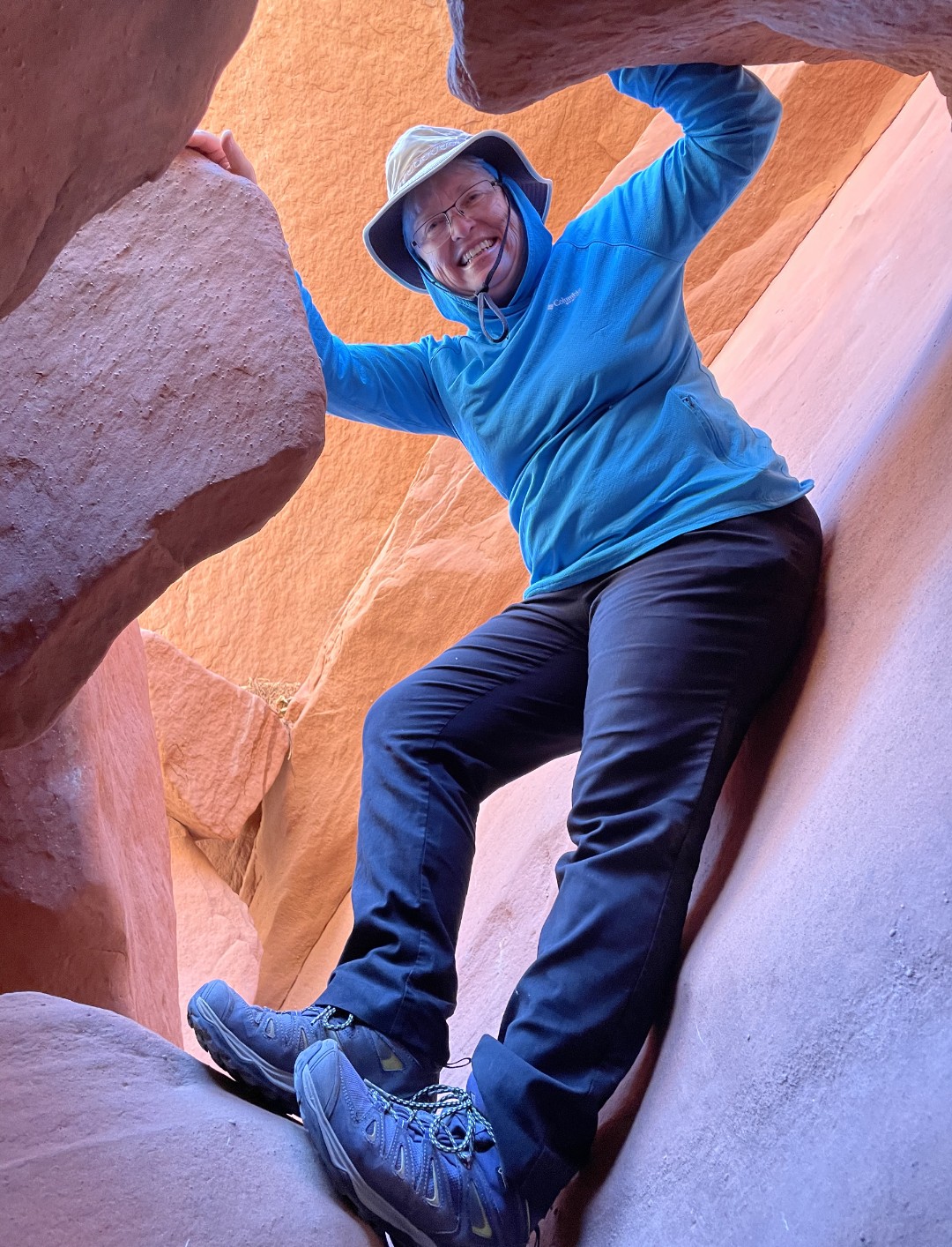
In her free time, Dr. Ryan enjoys spending time with her family and out in nature. Her dog, Otto, a Doberman/German shepherd/Aussie mix, is her constant companion.