

Faculty Spotlight: Dr. Stephanie Kuehn
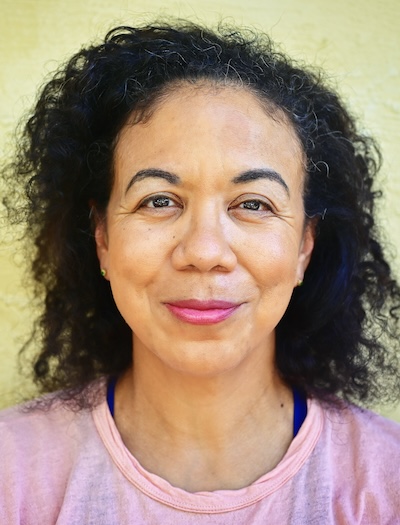 Dr. Stephanie Kuehn, a half-time institute faculty member in the Wright Institute's Clinical Psychology program, was born in Monterey, California. She was adopted at three months old and raised in the Elmwood district of Berkeley, California, where she lived with her parents and two older sisters. "Both of my parents are from the East Coast originally, but moved to Berkeley because of their interest in political advocacy," she explained. "My dad was a journalist at the San Francisco Chronicle and my mom worked for KPFA radio."
Dr. Kuehn and her sisters attended Berkeley public schools and were raised as avid readers and writers. After attending Berkeley High School for two years, Dr. Kuehn decided to go to a boarding school in Massachusetts for the remainder of high school. "I think boarding school was really romanticized in my mind, but I had a good time despite the fact that it was pretty elitist," she recalled. "It's a very different culture on the East Coast, which was an adjustment, but it was also very beautiful in that New England way."
For her undergraduate studies, Dr. Kuehn attended the University of California at Santa Cruz, where she decided to major in linguistics. "I find language fascinating and love learning about syntax, phonology, semantics, and how language works," she explained. "I didn't know much about linguistics at the time, but they had a really great program and I enjoyed being part of a close-knit group of nerdy, linguistics people." Dr. Kuehn also enjoyed learning about how human factors such as migration have impacted the evolution of language. She graduated from UC Santa Cruz in 1995 with a BA in linguistics.
In the years that followed, Dr. Kuehn and her husband had two children and she was increasingly frustrated that most of her income was going to childcare. When they found out that their third child was on the way, Dr. Kuehn decided to make a career shift and enrolled at John F. Kennedy University with plans of pursuing an MA in sport psychology. "After having kids, I challenged myself to do a 10k, then a half marathon, and soon I was running marathons," she recalled. "I found it so rewarding and it gave me so much confidence, so I became really interested in the connection between psychology and sports or athletic performance. The evening and weekend courses at JFK made it much easier for Dr. Kuehn and her husband to share the parenting responsibilities and spend more time with their children. Once she started at JFK, Dr. Kuehn decided to continue on in their dual degree program to earn her PsyD in clinical psychology.
Dr. Kuehn's first-year ethnographic placement at JFK was at The Springstone School in Lafayette, CA, where she worked with middle school students diagnosed with ASD, PDD, and non-verbal learning disabilities. "For the ethnographic placement, they place you with a population you're unfamiliar with, where you may have biases, or feel like the minority," she explained. "You spend time observing and helping out while reflecting on your feelings, judgements, and expectations." In her placement, Dr. Kuehn assisted an art and drama therapist and had a great experience. "We can read books or talk about things or discuss our own experiences, but it was very powerful to actually get the experience of what it's like to not feel comfortable and not know the rules and norms of a culture," she reflected.
During her second year, Dr. Kuehn's practicum placement was at Contra Costa Mental Health in their Child and Adolescent Services division, where she worked with clients with severe psychiatric disturbances. "It gave me a really large appreciation for family systems and reminded me not to think of clients in a vacuum, especially when you're working with kids," she recalled. "You have to think about a child in the context that they live in, and that's not just their family, it's also their care providers." Dr. Kuehn also gained a greater understanding of the role of public health and the lack of resources available to folks in need.
Dr. Kuehn completed her third year practicum at The Pacific Center for Human Growth in Berkeley, CA, where she provided individual and couples therapy for members of the LGBTQIA+ community. "One thing I really valued about that placement was that it was a big step toward being independent," she explained. "We were setting our own hours and fees, meeting clients on our own schedule, and that felt like a big step in terms of gaining confidence in who I was as a clinician." This was Dr. Kuehn's first experience working with couples and she really enjoyed it, especially her work with lesbian couples. "I found it very rewarding, engaging, and thought-provoking, and it made me think about my own relationship and how hard communication is," she reflected. "I learned so much, but also really enjoyed the work that I was doing and found it meaningful."
From 2013-14, Dr. Kuehn completed her internship at University of the Pacific's Counseling and Psychological Services (CAPS) in Stockton, CA, providing individual and couples therapy for their diverse student population. "I don't think I fully realized how much of CAPS work is community engagement and having a visible campus presence so that, when someone is in crisis, they think about CAPS," she shared. "We did different activities like bringing in therapy dogs, making smoothing, and handing out stress balls, with the goal of building our presence as part of the community." Dr. Kuehn was also excited for the opportunity to work with student athletes during her time at University of the Pacific. "If there were things we were interested in, those are the clients we would get," she explained. "So even though I wasn't doing sports psychology, I told them I wanted to work with athletes and I had a great time."
The title of Dr. Kuehn's doctoral dissertation was Misophonia: An exploration of the experience, symptoms, and treatment of selective sound sensitivity. She had personally dealt with misophonia since childhood and was surprised to find as she grew up that there were others with the same sensitivities. "It was validating to find other people who were self-identifying with misophonia," she recalled. "I was so interested in the range of experiences and how other people had coped, handled, or tried to deal with it." That interest was the basis of Dr. Kuehn's qualitative study where she interviewed people with misophonia about their experiences through the lens of an invisible disability.
Outside of her work as a psychologist, Dr. Kuehn is an award-winning young adult fiction author. In 2014, Dr. Kuehn's first young adult novel, Charm & Strange, was published. Charm & Strange won the American Library Association's 2014 William C. Morris YA Debut Award and her second book, Delicate Monsters, won the 2016 Northern California Book Award in the category of Children's Fiction for Older Readers. To date, Dr. Kuehn has published nine novels and contributed to several anthologies of short stories, all for young adults and primarily focusing on the themes of mental illness and psychology. "I had these two careers I was pursuing at the same time and I didn't really set out for them to have synergy," she shared, "but of course they ended up coming together."
Dr. Kuehn gave several presentations surrounding mental health and young adult literature in 2014-2015, speaking from her experience as a psychologist and as a writer. "I often get asked questions about the role of books and literature: Should we have books to cover hard topics? Can we have books with unhappy endings?" she explained. "The audience that I write for is older teens, so I don't think every book needs to have hope or a happy ending. I think there should be all types of books for all types of teens - they're smart, let them pick and choose." Dr. Kuehn thinks it's important for authors of young adult literature to approach difficult topics with honesty and integrity rather than forcing a positive outlook.
In 2015, Dr. Kuehn first came to the Wright Institute as a post-doctoral fellow in the Mentoring Program. "Having done the CAPS program at University of the Pacific, I was interested in working with students again, but wasn't sure what I wanted that to look like," she recalled. "I was interested in being involved in training and supporting students in a psychology program and happened to see the listing for the role at the Wright." Dr. Kuehn had heard great things about the Wright Institute during her training and the Mentoring Program seemed like a perfect fit. She loved working with Dr. Becky Pizer and Dr. Leon Wann who had developed the program and really appreciated their unique model of providing student support. "We provided support for practicum applications, ran workshops, and gave presentations for students," she explained. "We had a thoughtfully designed space that was painted yellow where students could stop by to ask questions, have meetings, or just eat their lunch." When she completed her fellowship, Dr. Kuehn decided to stay on at the Wright Institute and continued working for the Mentoring Program and later the Internship Support Team. Dr. Kuehn thrived in this student support role and eventually also served as a dissertation chair for many students.
In the fall of 2017, Dr. Kuehn was asked to take on the role of adjunct professor in the Clinical Psychology Program at the Wright Institute, in addition to her other roles. She was newly licensed and eager to explore this new opportunity, teaching Principles of Therapeutic Change, Tests and Measurement, and Internship Preparation during that first year. Over the next several years, Dr. Kuehn also taught Sociocultural Issues, Intervention: Family Systems, and Research Methods and Statistics. "The Sociocultural Issues class was a real learning curve because I came in as the course was being redefined," she recalled. "But I have come to really enjoy that class and I love seeing students I taught in their first year take a leap forward in their confidence." Dr. Kuehn also loves teaching Intervention: Family Systems because of the intense personal reflection it requires students to engage in. Last fall, Dr. Kuehn transitioned to the role of half-time institute faculty at the Wright Institute and would love the opportunity to teach a course relating to young adult literature or bibliotherapy sometime in the future.
Dr. Kuehn's biggest advice to prospective students in the Wright Institute's Clinical Psychology Program is to make sure they're ready to do the work. "Be sure you're in a place where you're ready to engage in this work, not just intellectually but also emotionally and with your full person," she explained. "It's not always easy and it can be overwhelming for people." She noted that when students are emotionally prepared for the level of introspection and self-reflection required, they're clearly more confident and successful in their studies. "As someone who went back to school later in life, I'm so glad I took the time to understand myself, my world, and my values first," she reflected.
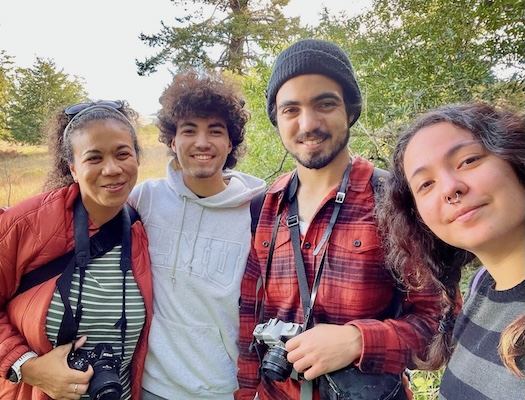 Outside of her busy work schedule, Dr. Kuehn has many hobbies to keep her busy. "I do some of my own short film work and have been helping out on sets around the Bay Area," she explained. "It's been so fun to be involved in creative endeavors!" She is passionate about photography and also still enjoys long-distance running, although she will have to put that on pause for a while due to a recent injury. Her family is, of course, also a huge part of Dr. Kuehn's life and she loves spending time with her husband, their three children, and their cats and dogs.
Looking ahead, Dr. Kuehn has lots of plans for her next chapter in life. "I look forward to continuing my work at the Wright," she shared. "I'm really loving it and am excited to be involved in the community as it approaches changes and transitions in the next few years." She also plans to continue her writing as well as her other creative pursuits that help her feel fulfilled and avoid burnout. "I raised a family, but my kids are grown now, so I'm looking forward to continuing to do the things I find rewarding in life," she explained.