

Student Spotlight: Emily Angstreich
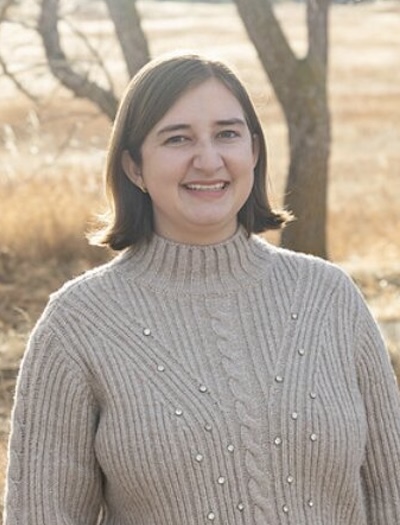 “I think back to my high school days when it was a big deal for me to talk about my depression and anxiety openly, then I think about how much harder it is to be open and honest about more stigmatized diagnoses,” shared Emily Angstreich, a fourth year student in the Wright Institute’s Clinical Psychology program. “I believe the key to therapy isn’t to focus solely on symptoms, but to witness all the complexities of a person; I want to help people who are misunderstood become understood.”
Emily was born in St. Louis, Missouri, but when she was still very young, her family moved to Connecticut and then to Los Angeles, California. “I was very much a bookish kid who liked to read, go to the library, and play board games, so the energy in Los Angeles didn't exactly fit who I was,” she explained. “I felt very unsure of myself, but that all changed in middle school when I joined the band and found my people.” Emily learned to play the flute and it became one of her favorite activities. She fell in love with music and, in high school, she was in a variety of musical groups. Through these opportunities, she performed at Carnegie Hall and in the Mozarteum in Salzburg, Austria. She considered pursuing a career in music professionally but realized another passion instead.
In her early teens, Emily began to struggle with depression and anxiety. “I was lucky to find a therapist that I connected with because it changed my life,” she reflected. “Even though it was a positive experience, I was embarrassed to be receiving help and tried to hide my struggles. However, when I eventually began opening up to my friends about my therapy journey, I realized I was far from alone. Countless other people started sharing their mental health struggles with me. This opened my eyes to the reality that most people, in some way, shape, or form, have a connection to the field of mental health.” Inspired by her conversations with others, Emily started a mental health club in her high school and was asked by her county’s TEDx council to give a TEDx talk when she was seventeen about her experiences speaking openly about her mental health. “Most of the time, when I talked openly about my depression and anxiety, I found that other people were struggling too,” she explained. “I also realized that by talking about it openly, others would feel less shame around seeking help.”
For her undergraduate studies, Emily returned to St. Louis and attended Washington University. From the start, it was very obvious to her that she should major in psychology and pursue a career in the mental health field. “I got a scholarship from WashU called the Danforth Scholarship for leadership. The motto of the scholarship is to ‘catch a passion for helping others’ and you’re highly encouraged to have a specific goal or change you want to bring to the world,” she recalled. “For me, that was my passion for mental health advocacy and destigmatization. After receiving the scholarship, I knew that Washington University was the place for me.” She graduated with her BA in Psychological and Brain Sciences with a minor in writing in 2022.
During her time at Washington University, Emily was a Counselor and Executive Director at Uncle Joe’s Peer Counseling and Resource Center, which offers peer counseling every night from 10pm-1am and a 24/7 phone line. “You apply in the first semester of your first year, then you do training for three hours every Tuesday night and eight hours every Saturday in the second semester,” she explained. “I got a hundred hours of training on basic counseling techniques and all of the different problems you may be presented with as a counselor and then, for the next three years, I got to put into practice actually working with people.” As the director of the program during her senior year, Emily managed a team of 63 mental health counselors.
Emily was a research assistant in the Early Emotional Development Program and the Anxiety and Psychotherapy Lab while at Washington University. Although she was very grateful for those opportunities, Emily quickly realized that research wasn’t the path for her. “I really admire the tenacity of researchers, but it was not for me,” she laughed. “Coding data and watching videos of other people interacting with volunteers and participants just made me wish I was the one doing the work because it felt so lonely to be stuck behind a computer screen.” This was compounded by the fact that it was taking place during the height of the COVID-19 pandemic, which was already quite an isolating time for her and helped Emily decide to pursue a PsyD instead of a PhD in graduate school. “I thrive when I am building connections with others, and I felt like a PsyD was the best path forward to achieve that,” Emily shared.
In 2022, Emily enrolled in the Clinical Psychology program at the Wright Institute. “My personal therapy has always been very psychodynamic, but in contrast, behavioral therapy was being taught in most of my classes at WashU,” she recalled. “I did not align with that approach because it wasn't what had helped me, so my search for graduate schools focused on places that taught in a psychodynamic way.” She applied to two different PsyD programs in the Bay Area and was excited when she was admitted to the Wright Institute. She was also drawn to the Wright Institute’s mission of social justice. “Coming from St. Louis, a place where there are countless disparities across income, healthcare, and education due to historical redlining and systemic inequalities, being at a program with an emphasis on social justice was essential for me,” Emily reflected.
During her first year, Emily completed her practicum at Diablo Valley College’s College Wellness program as a psychological trainee. “I met one of the most amazing supervisors of my life there, Dr. Layli Khaghani,” she reflected. “She is now also my dissertation chair and has been a huge mentor to me.” This first practicum experience proved to Emily that she was following the right path and could manage the demands of a doctoral program. It also helped her become more flexible in her thoughts about what makes for effective therapy. “I learned the power and potential of working in a very relational way, even in a short amount of time, because the treatment was only ten sessions per client,” she explained. “I was shocked at how much we could get done and it was encouraging to see that therapy can look a lot of different ways.” Dr. Khaghani was also instrumental in helping Emily grow her capacities to work with clients of different identities. “Most of the clients I saw were low-income first-generation college students, and I always wanted to be mindful of my positionality as a student in a doctoral program who had access to very different resources and opportunities,” she said. Dr. Khaghani always provided reflective spaces in supervision for Emily to openly think about how she showed up with her clients and ways she could grow her own understanding.
Emily completed her second year practicum as a psychological trainee at the Wright Institute’s Psychodynamic Clinic. She had been eager to train there because of her interest in psychodynamic therapy. “I absolutely loved the experience of being at that clinic and it helped me improve and build the foundations of being able to do long-term psychodynamic work, but I was surprised at how I felt like I wanted more than what I was doing there,” she reflected. “Prior to graduate school, I had envisioned having my own private practice where I would only see people long-term psychodynamically, but now it didn’t feel like enough.” Looking back, Emily realized that her work at Uncle Joe’s Peer Counseling and Resource Center had taught her that there were many other ways to help people beyond the scope of long-term psychodynamic therapy.
Last year, for her third year practicum experience, Emily worked at Sutter Alta Bates Herrick Hospital in their inpatient psychiatric hospital and intensive outpatient programs. “I wanted to try a very fast-paced, very short-term environment where I might only see a patient one time or the patient may be in a state of psychosis for the entire time I'm with them,” she explained. “It was very different from anything I've ever done before because I was meeting people in that moment of crisis and need and I was following them throughout the day to groups, meetings with their psychiatrist, and check-ins with their social worker.” In this role, Emily learned a lot about interdisciplinary collaboration and how important it is for patient care. “My biggest takeaway was that nurses know how to run the hospital,” she shared. “They may not have the most glamorous title, but they are the ones who always have the most information and deserve, in my opinion, the most respect.” Emily also was exposed to working with diagnoses of serious mental illness, including schizophrenia, bipolar disorder, and other psychotic spectrum disorders. “Many of the people I met in the hospital had been struggling with their diagnoses for years, but they had rarely had someone talk to them like a regular human being,” Emily reflected. “Instead, the focus was always on their symptoms. In my role, I found I could make the biggest impact by talking to and connecting with people as complex, multi-faceted beings who had more in their lives than just a diagnosis.” This inspired her to make working with and destigmatizing serious mental illness part of her career trajectory.
Emily is currently working as a psychological trainee at WestCoast Children’s Clinic on their Advanced Assessment Track. After working with adolescents for the first time in her previous practicum placement, Emily was eager to gain more experience in that area. “I realized how exciting that work was because there was so much resilience and energy among that population,” she explained. “Those kids had seen the most horrific things and yet still had the ability to provide comfort and support to their peers and to show up every day to meet with me, someone they barely knew.” At WestCoast, she’s excited to be able to work with children in a more long-term capacity, collaborating with their families, schools, and therapists. Emily is enjoying the opportunity to gain more assessment training and experience with adolescents in this position.
The title of Emily’s dissertation is Severed Faith: Psychological Impacts of Disaffiliation from the Church of Jesus Christ of Latter-day Saints, inspired by her mother’s family who left the Mormon church. “It felt really important to make my dissertation something that I was passionate about and something that excited me,” she recalled. “I wanted to understand more about my family, but also more about what it's like to leave a really high control group in general.” Emily found that the experiences of individuals vary widely, but generally include fear, anxiety, and ruptures in relationships.
For the past two years, Emily has been the lead teaching assistant for Dr. Dale Siperstein’s Assessment course. She shared that one of her happiest memories at the Wright was the day Dr. Siperstein asked her to TA for her class because she is one of Emily’s biggest mentors. “Teaching and therapy have a lot of similarities,” she reflected. “In both cases, you are forging relationships that help people learn and grow. But I find that as a teacher, I can let a different side of myself come out. I love making jokes with students, grabbing coffee together to talk about career advice, and supporting their unique journeys in psychology.” Emily loves being a TA and has found that teaching is a way to multiply her impact by training other future therapists. “It has been the joy of my career thus far,” she shared. “The one thing I'm absolutely certain I want to do is continue to teach.” Emily hopes to one day return to teach at the Wright Institute, if the opportunity presents itself.
During her time at the Wright Institute, several other instructors have had a huge impact on Emily. Her Case Conference instructor, Dr. Larry Miller, was very encouraging. “He helped me think a lot about the way that I show up in spaces,” she recalled. “He was really intentional in talking about our group dynamic in class in order to help us think more about ourselves and our work with patients - that was a really beautiful approach that helped me bring a new level of reflectiveness and humility to my therapeutic work.” She has formed close bonds with Dr. Layli Khaghani, who was her supervisor in practicum, her Advanced Clinical Seminar instructor, and now her dissertation chair. Emily is also grateful to have taken Intervention: Brief Therapy with Dr. Daniel van Beek, who was later her point person during her internship application process. “He's a much more behavioral clinician than I am, but after learning from him in class, I really believe a behavioral approach can be helpful to people,” she shared. “He was so thoughtful and brought such a human relational element into his work.”
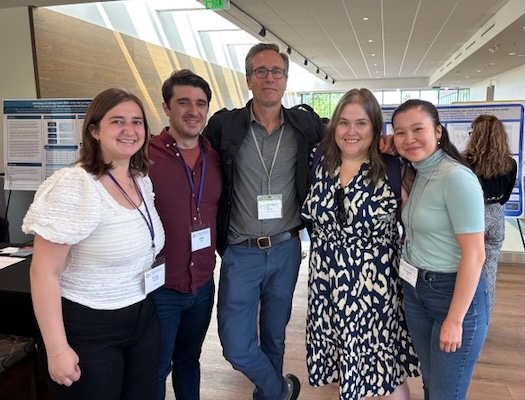 Dr. Siperstein also introduced Emily to the Collaborative Assessment Association of the Bay Area (CAABA), where Emily first learned about the concept of collaborative therapeutic assessment. “It’s a collaborative way of doing assessment work where you see the client as your equal in terms of finding out the answer to their assessment question,” she explained. “They are the experts on themselves, you are the expert on the test material, and the goal is to combine both your expertise and work hand in hand.” Emily loved this approach and was eager to become involved in the organization. She earned a scholarship through CAABA to attend the Collaborative/Therapeutic Assessment Conference last June and became their first graduate student representative last October. Through this, Emily also became close with Dr. Hadas Pade, the President of CAABA and the leader of the Wright Institute’s Assessment Clinic. This year, Emily has been working with her as the clinic’s intake coordinator and has enjoyed the opportunity to understand the ‘behind the scenes work’ of running a clinic. Emily will also be presenting with Dr. Pade on the role of artificial intelligence in assessment training at the Society for Personality Assessment’s annual conference.
Emily has made many happy memories and amazing friends during her time at the Wright Institute. “After a lot of my undergraduate experience was shadowed by COVID-19, I was really excited for grad school to be a second chance to make connections and to meet people. It has been that and more,” she reflected. “An entire new world has been created for me here and I've learned so much about the kinds of people that I want to surround myself with - it has been absolutely amazing.” Emily has been especially grateful for these connections as the current events in our country become more and more troubling. At times, she struggles with the fact that being in school limits her ability to participate in political and activist movements, however she believes that finishing her degree will open up more pathways for her to help those who are the most harmed by governmental actions. She also wants to prioritize working in places that support individuals who often have the largest barriers to care. “At WestCoast this year, I primarily work with non-white low-income families and I'm always focused on showing up in a way that's meeting my clients where they are and not imposing my ideas,” she shared. “I want to give them agency and control in a system that has oftentimes stripped that away and been very harmful.”
The most valuable lesson Emily has learned during graduate school is to “always be asking,” as she phrased it. “One of my friends at a practicum actually came up with this phrase,” Emily laughed, “because I was the person everyone would go to when they wanted to ask a question but were too nervous to do so. This is how I take full advantage of being in a school environment with so many incredible professors,” she explained. “I’m always asking my professors questions when I’m confused, always asking about extra opportunities to try new assessment measures, and always asking for ways to be involved with different groups and organizations.” Her advice to her fellow students is to do the same, even if they are nervous or afraid of rejection. “I have found that almost every person in this field is warm and willing to answer questions and lend a helping hand,” she added. “And as a therapist, it doesn’t hurt to “always be asking” your clients more questions either!”
In her free time, Emily really enjoys completing puzzles. She is passionate about the New York Times game section, Puzzmo in the San Francisco Chronicle, and sudoku. She also enjoys board game nights with friends, including a group of friends from her case conference that gather regularly to watch movies and play various games. “Other friends from the program have pushed me to try all sorts of new things. One of my really good friends here is always down for a hike and she probably goes every weekend, so she often convinces me to go” she shared. “I even went camping with her a few months ago, which was terrifying but fun. Other friends host art shows that I go to, work at small shops in the East Bay that I enjoy spending time at, and find other ways to stay in community, ” Emily loves living in the East Bay, but enjoys visiting with friends who live in the city to get a taste of the city life.
Next year, Emily will be completing her internship at Nassau University Medical Center in New York, where she will be doing a mixture of inpatient work, assessment, consultation, and emergency room psychology. After she graduates from the Wright Institute, Emily definitely wants to do assessment work with clients. After her practicum experiences at the Psychodynamic Clinic and Sutter Alta Bates Herrick Hospital, she also became very interested in working with clients with psychosis and other serious mental illnesses. “I am really interested in the underlying experiences that people are having that have led them to be in a place where they're experiencing psychosis,” she explained. “I can safely say I've never seen a case where it's just someone's biology that has led them to act in a certain way - there's always something else going on and I find that so interesting.” While she’s still unsure if she’ll find herself working in a private practice, a community mental health organization, or a hospital setting, she’s excited to see what the future holds.