

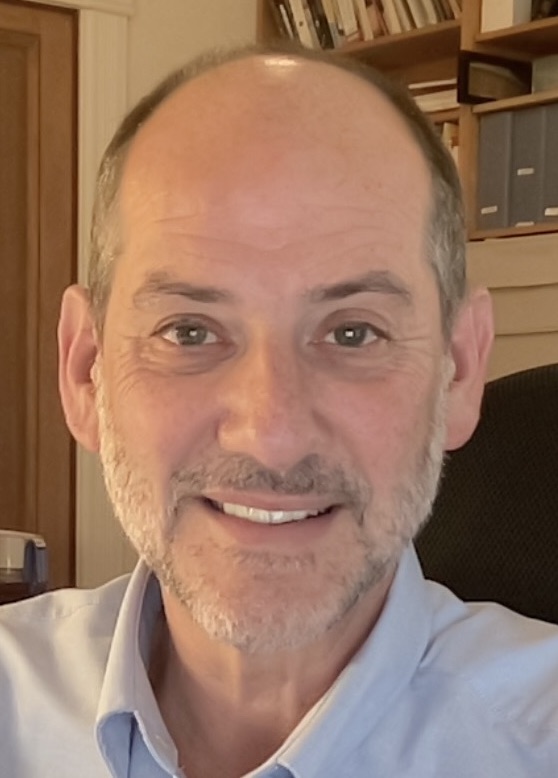
 Larry Miller, PhD
Half-Time Institute Faculty
lmiller@wi.edu
PhD in Clinical Psychology, The Wright Institute, 2001
MS in Clinical Psychology, San Francisco State University, 1994
BA in Psychology, Phi Beta Kappa, State University of New York at Albany, 1987
A graduate of the Wright Institute (Class of '01), Dr. Miller has studied and taught about the impacts of trauma on diverse communities. In 2003, he created a training program at Child Haven Inc. in Fairfield, CA, a clinic focused on treating abuse and neglect among underserved communities in Solano County. His work at Child Haven Inc. and as a psychologist working with incarcerated individuals has deepened his understanding of the intersections among trauma, attachment, and culture across the developmental lifespan. These intersections inform his clinical work and teaching at Child Haven Inc., the Wright Institute, and the Northern California Society for Psychoanalytic Psychotherapy, with a focus on how culture and trauma shape the self within community.
Dr. Miller's forensic work has centered on the impacts of risk and protective factors and developmental trauma. From 2008 to 2014, he taught on the effects of trauma at the Criminal Justice/California Public Defender Association's annual death penalty conference. His forensic practice includes providing mitigation for death row defendants and offering expert witness testimony in capital cases and major criminal proceedings, particularly those involving defendants who were teenagers at the time of the offense.
Dr. Miller is actively engaged in expanding equity, diversity, and inclusion across multiple settings, including his work at Child Haven Inc. and his board service with the Psychoanalytic Couples Psychotherapy Group (PCPG). The Black Lives Matter and #MeToo movements have sharpened awareness of how far we remain from meaningfully reckoning with histories of inequality, racism, sexism, and homophobia. He is committed to increasing diversity in the field — among students, practitioners, supervisors, and board members — and to creating space for new voices to lead.
In his Berkeley private practice, Dr. Miller draws on attachment theory, object relations, and the intergenerational transmission of resilience and trauma, working with children, adults, couples, and families through individual and dyadic/family systems approaches. He founded and continues to lead the Refugee Treatment Group, through which licensed therapists provide pro bono treatment to refugees and survivors for as long as it takes — a principle borrowed from the Home Within model.